Sustainability
Sustainability at New Leaf isn’t a fixed checklist. It’s an ongoing commitment to making better decisions as options evolve, new ideas emerge and circumstances change. What’s available to us today wasn’t always available five years ago – and what we do five years from now will likely look different again. We keep learning and we keep adapting.
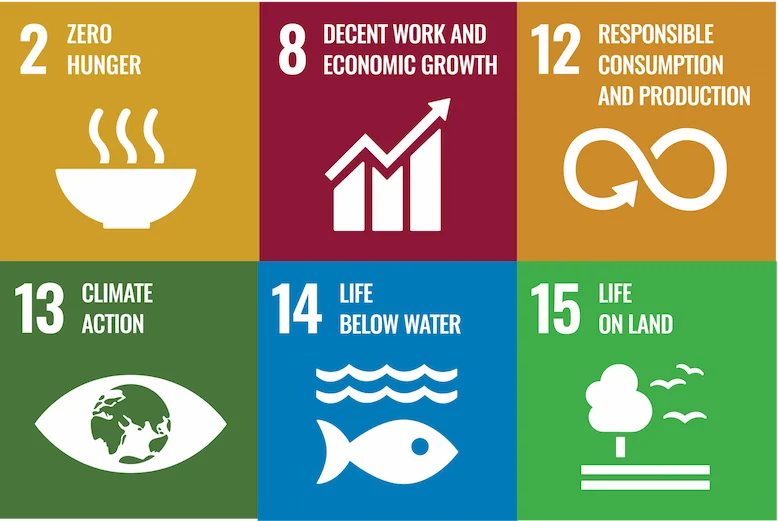
New Leaf’s sustainability commitments align with the United Nations Sustainable Development Goals, particularly SDG 2 (Zero Hunger), SDG 8 (Decent Work and Economic Growth), SDG 12 (Responsible Consumption and Production), SDG 13 (Climate Action), SDG 14 (Life Below Water) and SDG 15 (Life on Land).
Plastic & Waste Management
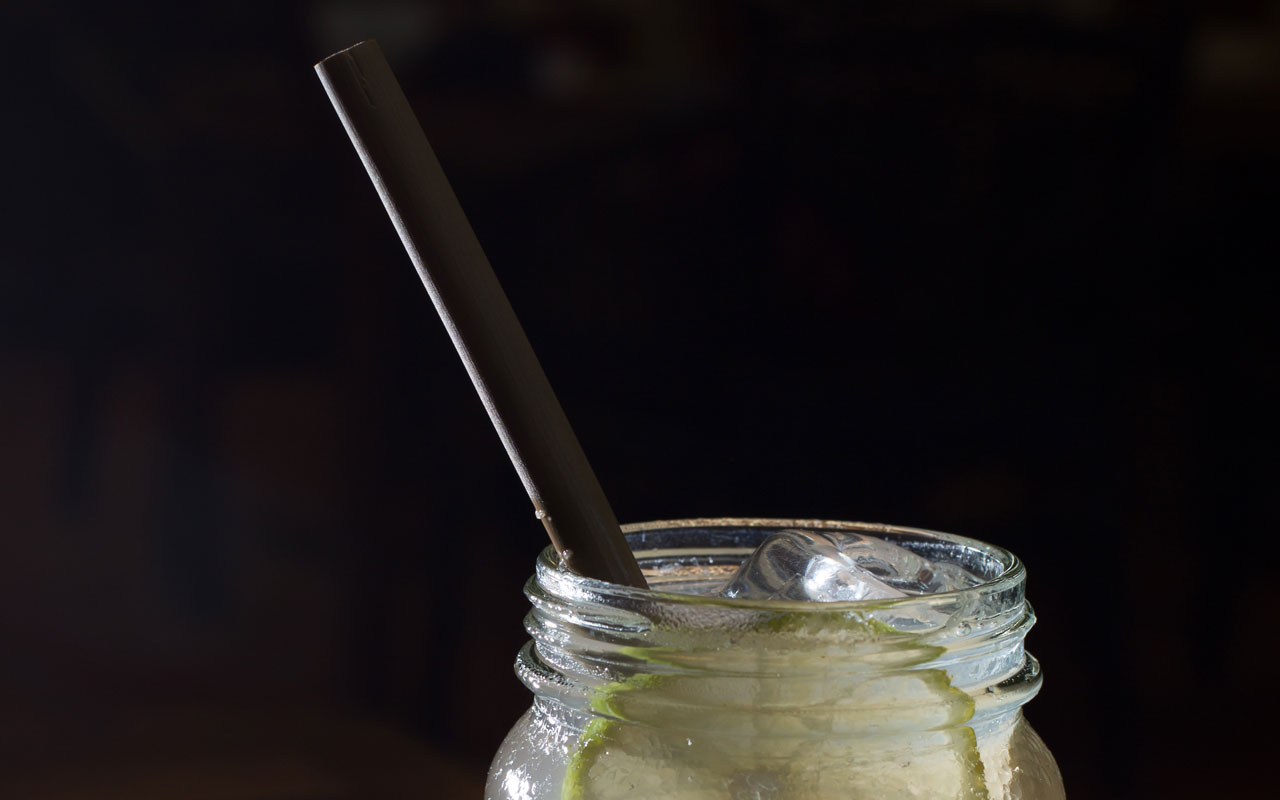
We were early adopters of bamboo straws before switching to stainless steel. Our takeaway and delivery packaging is 100% biodegradable.
Fresh produce arrives from our main supplier in reusable crates rather than single-use packaging. We default to local options where they exist – including Cambodian mineral water – and make considered decisions where they don’t.
Some plastic remains in our operation, but every instance has been thought through rather than defaulted to.
Local and Responsible Sourcing
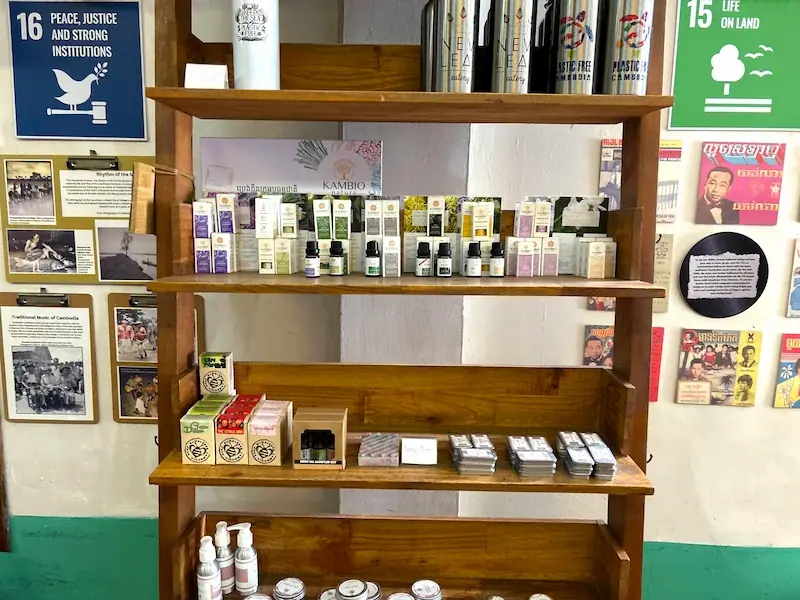
We source ingredients locally wherever possible – from Cambodian farms, local markets and regional producers. The same philosophy extends to everything else we buy. Our plates and bowls are made by Morodok, a Siem Reap ceramics workshop using traditional Khmer techniques with an all-Cambodian team. Our water glasses are up-cycled by Was Waste, a Cambodian initiative that collects glass bottles – otherwise non-recyclable in Cambodia – and transforms them into new products. You’ll find further Was Waste pieces on our shelves.
We also stock products from a small number of carefully chosen local organisations and artisans. OTA – Off Track Accessories – is a women-led collective making handmade bags and accessories from upcycled tyres and tubes, creating local employment and turning a waste problem into something worth carrying. BumbleBee Cambodia is a Phnom Penh social enterprise producing handcrafted soaps and natural skincare in small batches – responsibly made, minimal packaging. Kambio Nature makes locally produced scented oils.
Somphors, a local artisan who sells at the Made in Cambodia market, creates beeswax candles, bracelets and coasters from palm wood and resin – and connects us to a village artisan near Siem Reap who harvests and weaves water hyacinth. That hyacinth is an invasive weed that grows unchecked in the Tonle Sap lake, starving fish and other life of oxygen. Turning it into products creates both employment and an incentive to manage a genuine ecological problem.
Plant Based Menu Options
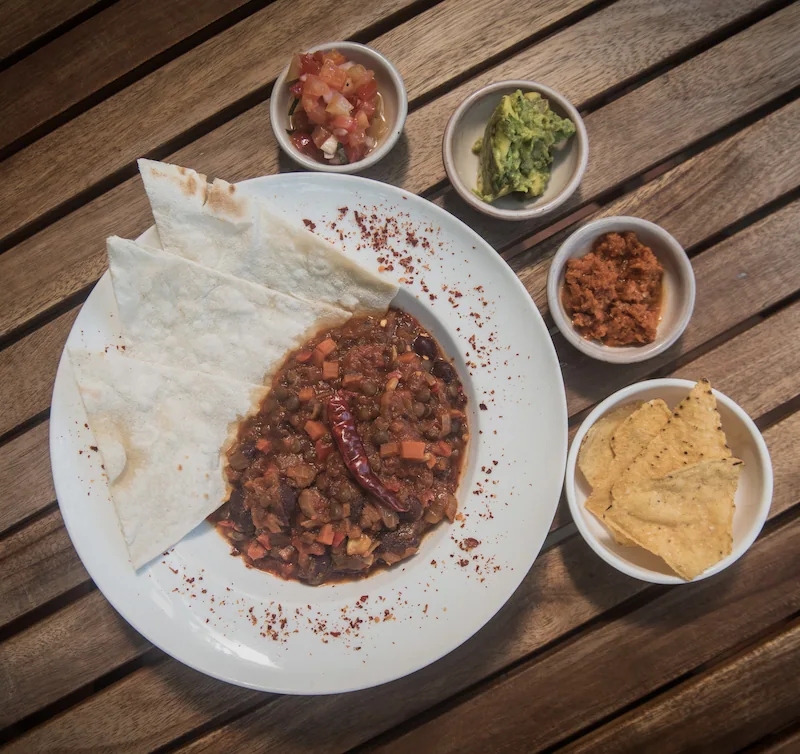
Over 50% of food we sell is vegan or vegetarian – because we’ve made plant-based options genuinely appealing. A table of mixed eaters where one person orders the vegan curry introduces that dish to everyone at the table.
Animal farming requires significantly more land, water and energy than plant-based food production, and irresponsible fishing practices damage aquatic habitats and biodiversity.
Offering excellent plant-based food is one of the most direct contributions a restaurant can make to reducing that impact.
A Responsible Employer
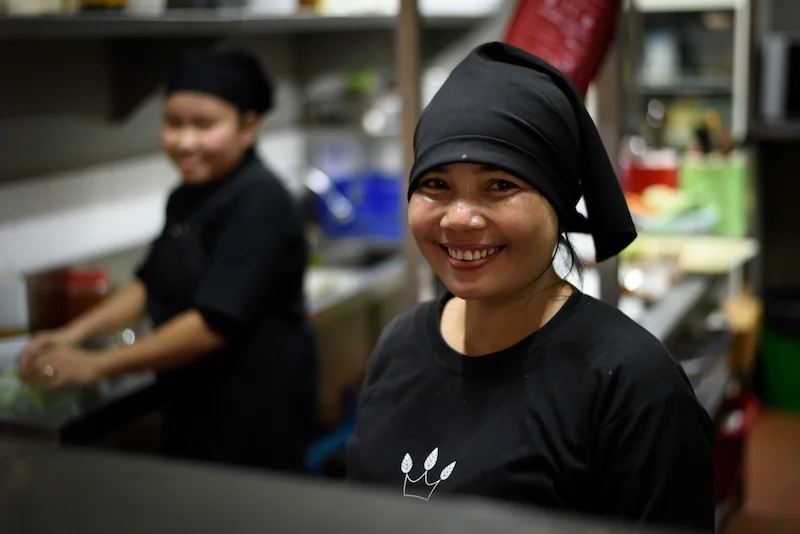
We are an entirely Khmer-run restaurant. Our team receives fair pay, health insurance, pension contributions and a share of the profits they help generate. These commitments cost money – which means we donate a little less than we otherwise might. We think that’s the right trade-off.
A business that treats its employees well, pays its taxes and sources responsibly is doing something meaningful even before it writes a single cheque to charity.